


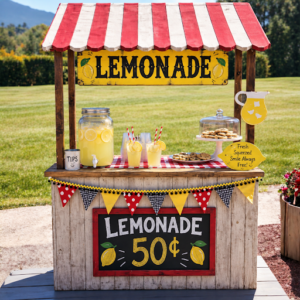
Imagine a kid setting up a lemonade stand. He buys the lemons, sugar, cups, and ice, spends all morning making the lemonade, and then waits for someone driving by to tell him what they’re willing to pay for it. Sounds like a terrible business model, doesn’t it?
Welcome to farming. I can’t think of many other businesses where you spend millions of dollars on equipment, land, seed, fertilizer, chemicals, fuel, and labor, work all year to create a product, and then somebody else decides what you get paid. Most businesses get to determine their price. Farmers don’t. They can’t simply raise the price of corn because their costs went up. If the market says corn is worth $4, that’s what it’s worth. Dwell on that for a while.
Over the weekend, I was tailgating with an old high school friend of mine who farms. Naturally, we started talking about corn. I asked him how he felt about the market on the path to $6 corn. His answer was bittersweet. Sure, the thought of $6 corn is better than $4 corn, but he said the extra profit he thought he was going to make is now going into the fuel tank. Think about that. The price of what he sells went up, but so did the cost of producing it. He finally gets a little breathing room, and then somebody moves the walls.
That’s why the economics are getting harder to ignore. Equipment costs more. Inputs cost more. Labor costs more. Interest costs more. Nearly everything required to produce a crop has gotten more expensive, while the farmer still has remarkably little control over what he’ll get paid for that crop. Something has to give. I don’t think the next major transformation in agriculture will be driven by farmers wanting the latest technology. It will be driven by economics. When the old way of doing things no longer pencils out, farmers will find a different way.
They may not get to write the price on the sign, but our goal is to give them a hell of a lot more control over what it costs to make the lemonade.
-Craig